
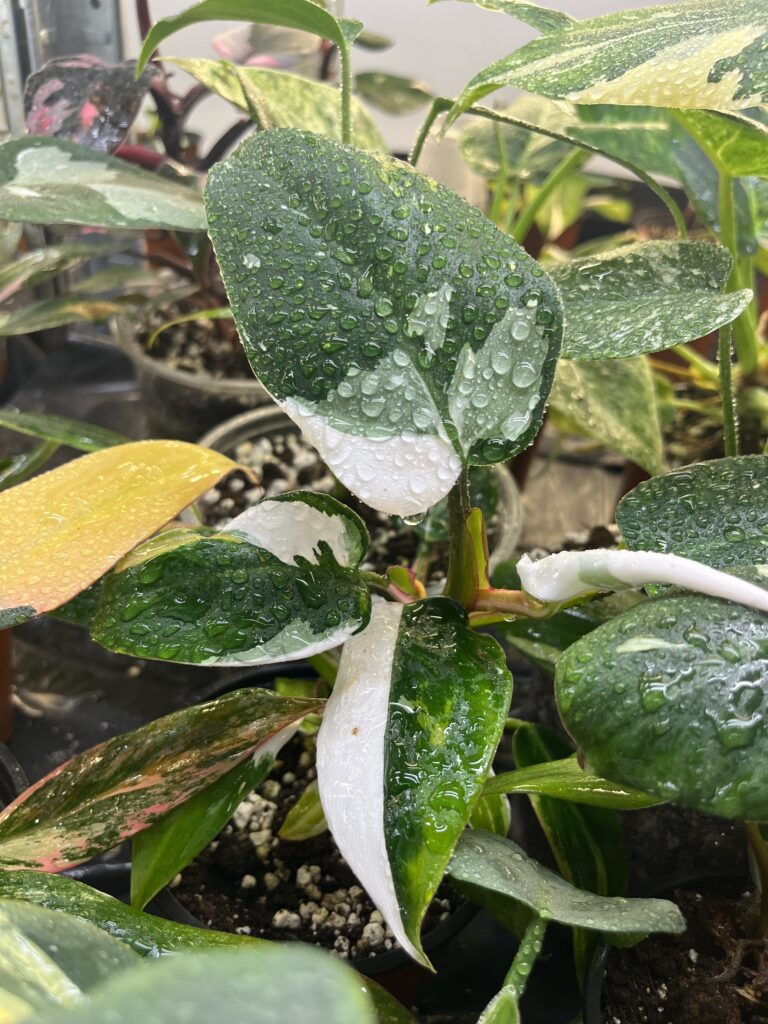
Variegated houseplants offer a distinctive aesthetic in indoor gardening, featuring leaves adorned with multiple colors such as cream, white, pink, yellow, or red alongside green. This creates elegant patterns that enhance any living space. But what defines variegation, and why have these plants become so popular? Variegation occurs when certain parts of a plant's leaves lack chlorophyll, the pigment responsible for green coloration and photosynthesis. This results in striking stripes, spots, splashes, or edges. It can develop naturally through genetic mutations or through selective breeding to highlight visual interest. Key types include:
- Marginal variegation: Color concentrated along leaf edges, as seen in the white borders of a Maranta 'Lemon Lime'.
- Blotch or splash variegation: Irregular patches, evident in the creamy swirls of a Monstera Thai Constellation.
- Patterned variegation: Defined stripes or veins, like the white part on Philodendron White Princess.
These plants bring texture and sophistication to interiors, suiting various design styles. Due to reduced chlorophyll, they grow more slowly and require bright, indirect light for optimal health—details to explore in upcoming articles. At Elysium Rare Houseplants, we specialize in producing and sourcing these exceptional plants to elevate your space.